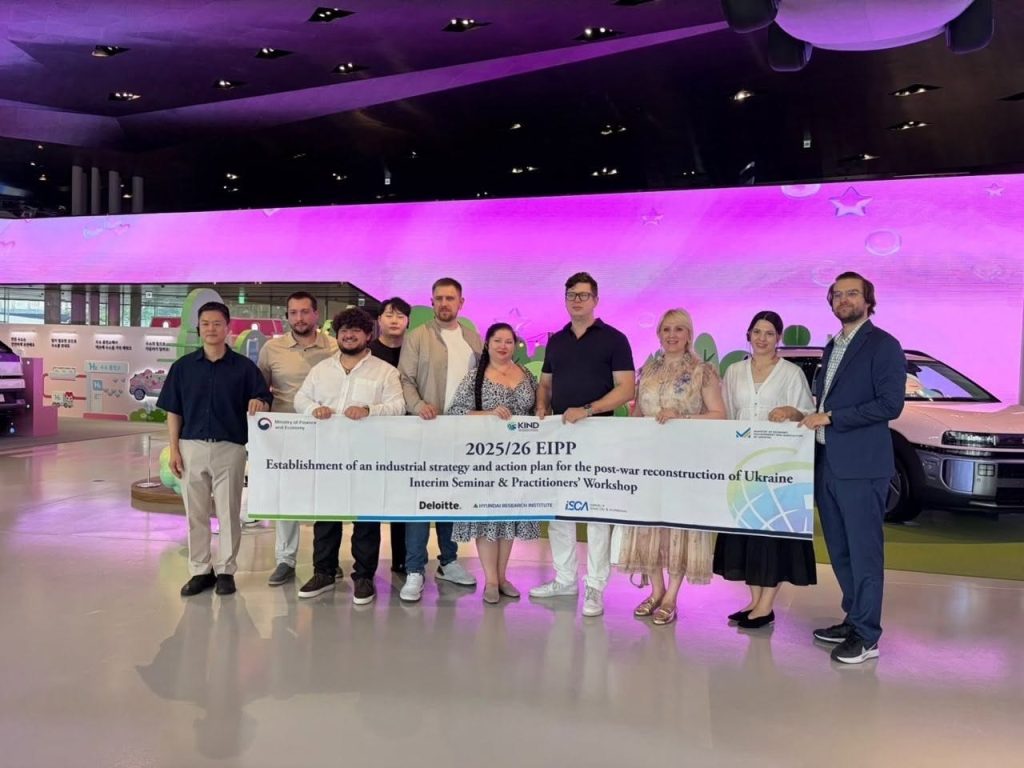
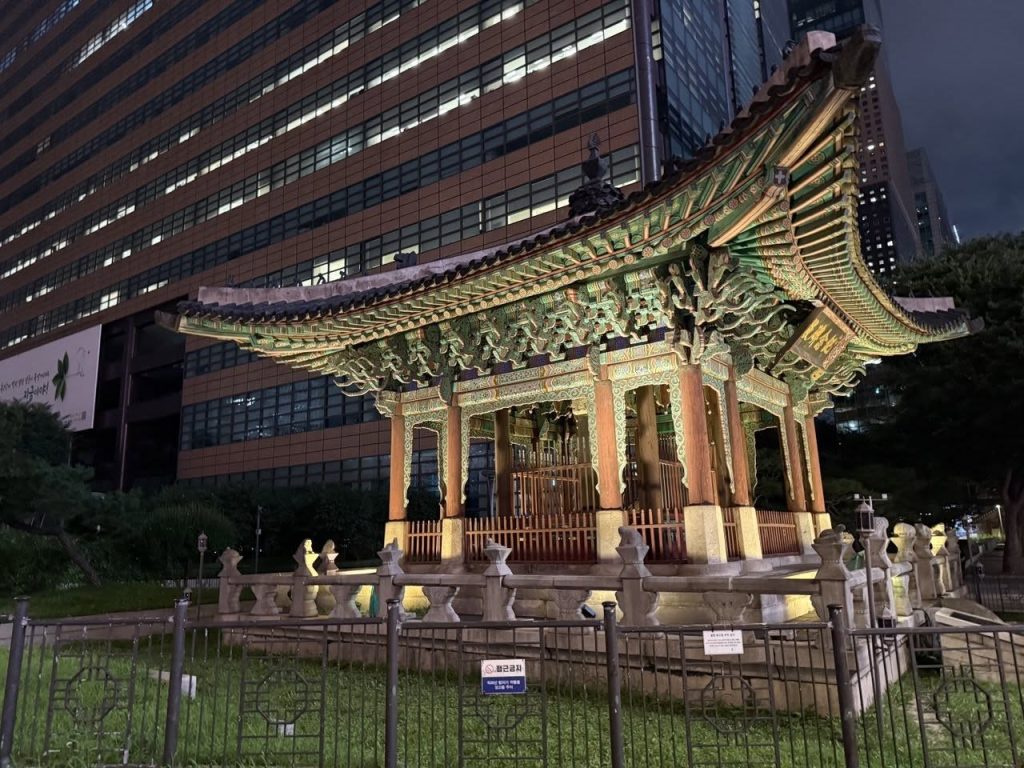
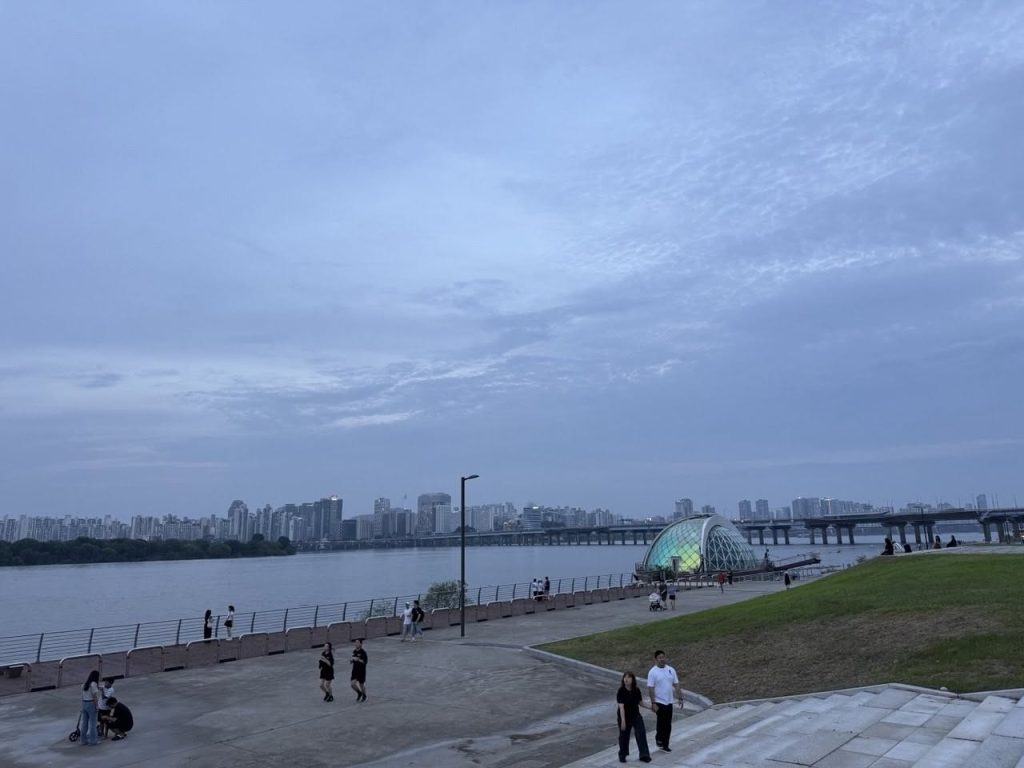
Perfect roads, dozens of bridges, modern technologies, and innovation clusters. South Korea is often associated with Samsung, Hyundai, or robotics. But the secret to its success lies not in individual companies, but in a systematic approach to economic development. It was precisely this approach that a Ukrainian delegation studied during a study visit to South Korea as part of the EIPP Ukraine program – the Economic Innovation Partnership Program. The delegation included Mykhaylo Leichenko, Director of IT and Analytics at the Center for Innovations Development.
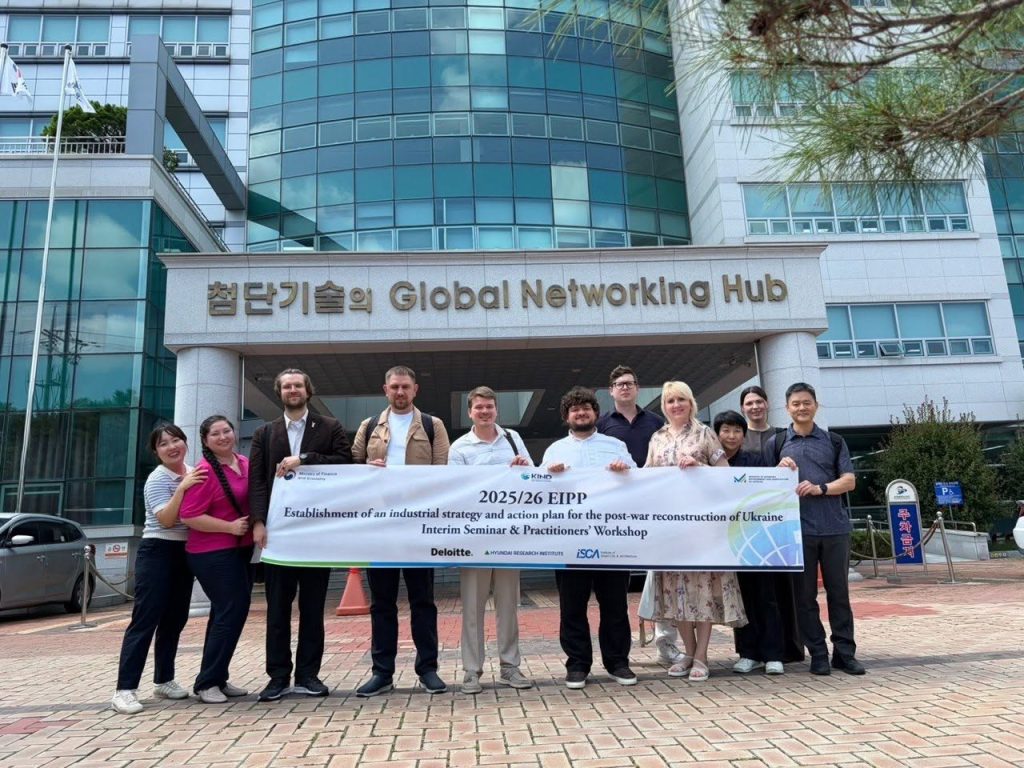
“Five days in Korea is not nearly enough time to understand this country,” is how Mykhaylo Leichenko describes his first impressions.
They began on the drive from Incheon Airport. Impeccable multi-lane roads, clear lane markings, disciplined traffic, dozens of speed cameras, modern public transportation, dozens of bridges across the Han River, and the green hills that literally surround Seoul. At first glance, it seemed like just a comfortable urban environment. However, within just a few days, it became clear: everything around us is the result of well-thought-out economic decisions.

A country that rebuilt itself
South Korea’s history resonates with Ukraine today. After the Korean War, the country was left with a devastated economy, a shortage of resources, and a dependence on imports. Instead of a haphazard recovery, it chose a long-term development strategy. The government began investing in manufacturing, education, science, transportation infrastructure, and technology. Imported raw materials were gradually transformed domestically into high-value-added products that are now known throughout the world.

Automobiles, ships, electronics, robotics, artificial intelligence, digital twins, energy technologies – all of these are the result not of isolated reforms, but of decades of consistent industrial policy.
Why do Korean clusters work?
One of the main topics of the training program was an introduction to the cluster development model. In Korea, a cluster is not simply a group of companies in the same industry located nearby. It is an ecosystem that brings together manufacturing, universities, research centers, technology parks, laboratories, testing facilities, local governments, and business support institutions. What matters most is not geographical proximity, but the interconnection among all participants in the production process.
In fact, every cluster is built around the entire value chain: idea → research → technology → prototype → testing → certification → production → sales → export. This principle—rather than a formal association of companies—has been the foundation of Korea’s economic breakthrough.
The technopark as a center for regional development
The role of technology parks was particularly instructive for the Ukrainian delegation. In Korea, these are not just business centers or areas where companies operate. A technology park acts as a driver of regional development: it supports startups, coordinates collaboration between universities and businesses, evaluates technology projects, facilitates the commercialization of innovations, and manages specialized infrastructure. In effect, it serves as a “one-stop shop” for regional industrial development.
How it works in practice
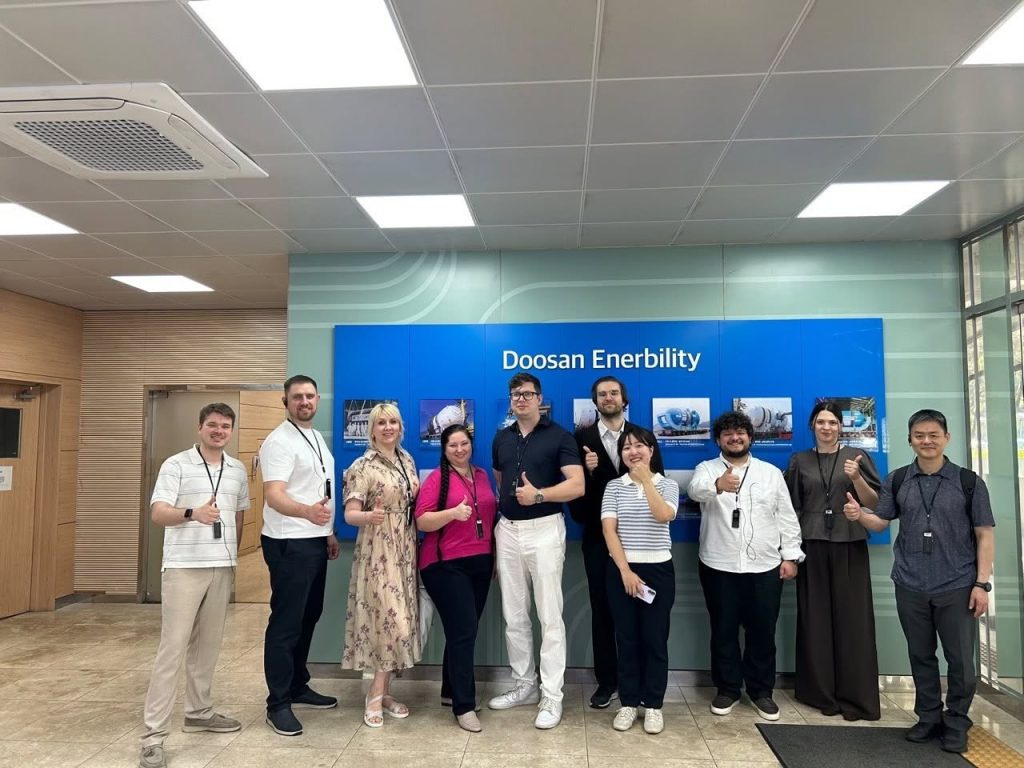
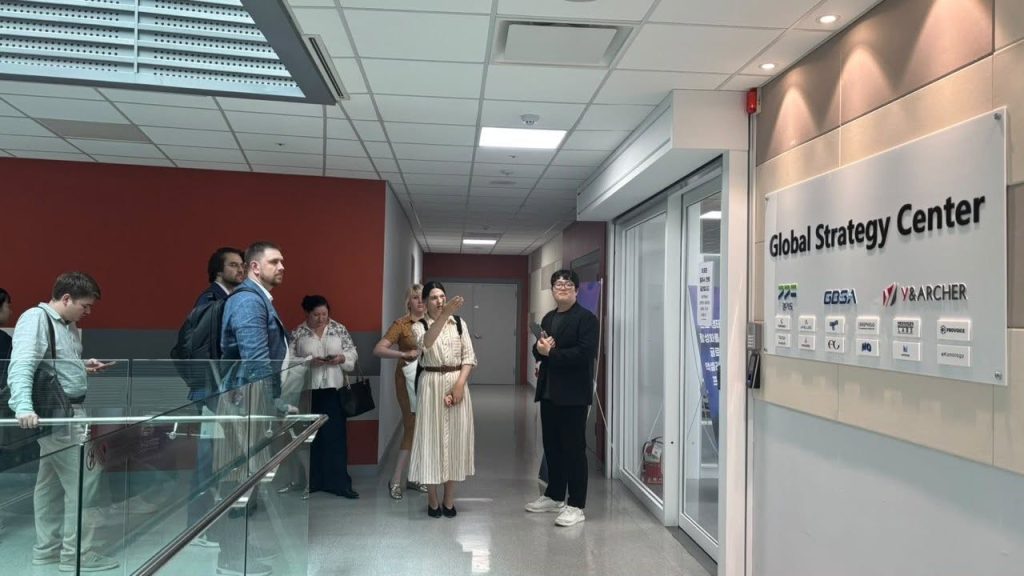
The Ukrainian delegation was able to see the theoretical model firsthand during visits to leading innovation centers.
In Pangyo Techno Valley, major tech companies, startups, and business support institutions operate side by side. But the main value lies not in the proximity of offices, but in the ability to quickly find partners, receive consultations, use shared infrastructure, and launch new products.
At Digital Open Lab, small companies can work with 3D printers and other modern equipment for prototyping without significant investment.
During their visit to NAVER, the Ukrainian delegation saw how a single large tech company can become the hub of an entire innovation ecosystem, around which new businesses, research teams, and manufacturers develop.
Specialized testing centers were another key element. These centers test new engines, electrical systems, fuel cells, and other components even before mass production begins. As a result, each participant is responsible for its own stage of the process, but everyone works as a single system.
We don’t need to copy Korea. We need to understand its principles.
During the Business Round Table, Mykhaylo Leichenko presented the Innovation Development Center’s approach to analyzing clusters in Ukraine to the Korean partners.
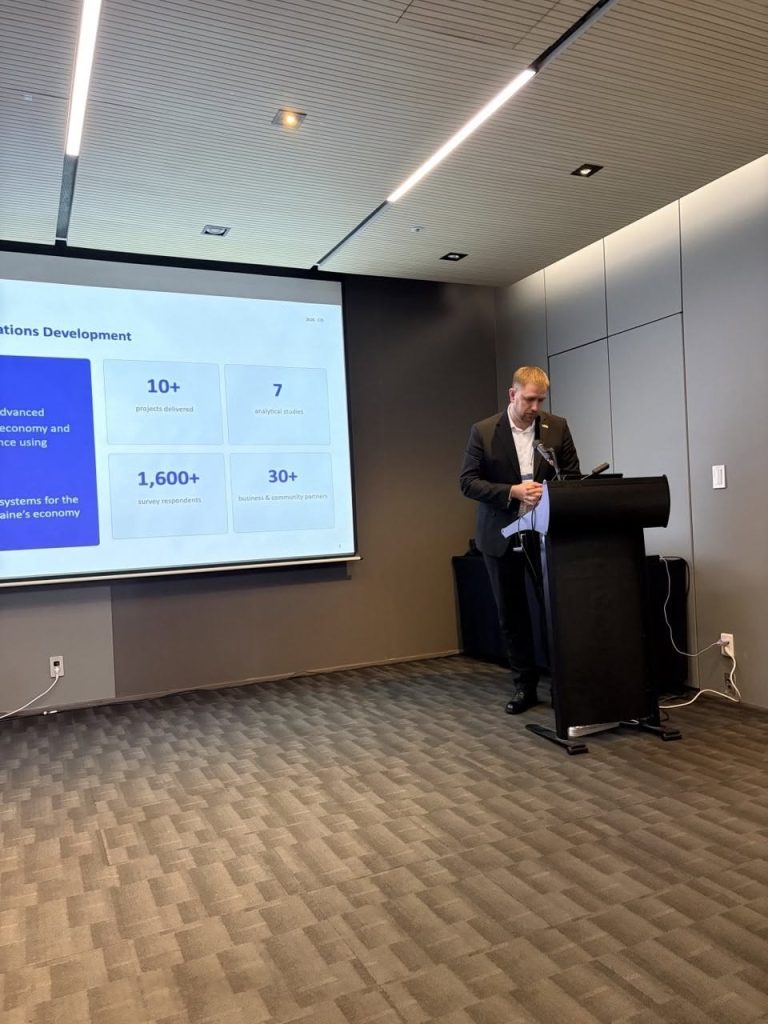
Its essence lies in examining not only individual enterprises but also the connections between them—who the suppliers are, who manufactures the final product, and what technologies or infrastructure are lacking to develop a complete production cycle. Such an analysis helps identify weak links in the economy and formulate solutions that businesses and regions truly need. According to Mykhaylo Leichenko, Ukraine does not need to copy the Korean model. Instead, it should adopt its main principle – a systematic approach.
South Korea demonstrates that economic growth does not begin with a single factory or a successful company, but with the interaction between business, science, education, the government, and infrastructure. This approach could become one of the cornerstones of Ukraine’s post-war economic recovery, as regions develop their own strengths, build complete production chains, and create competitive products for global markets.